
NEW RELEASES
PRE-RELEASE—AVAILABLE NOW ONLY AT ABLAZE
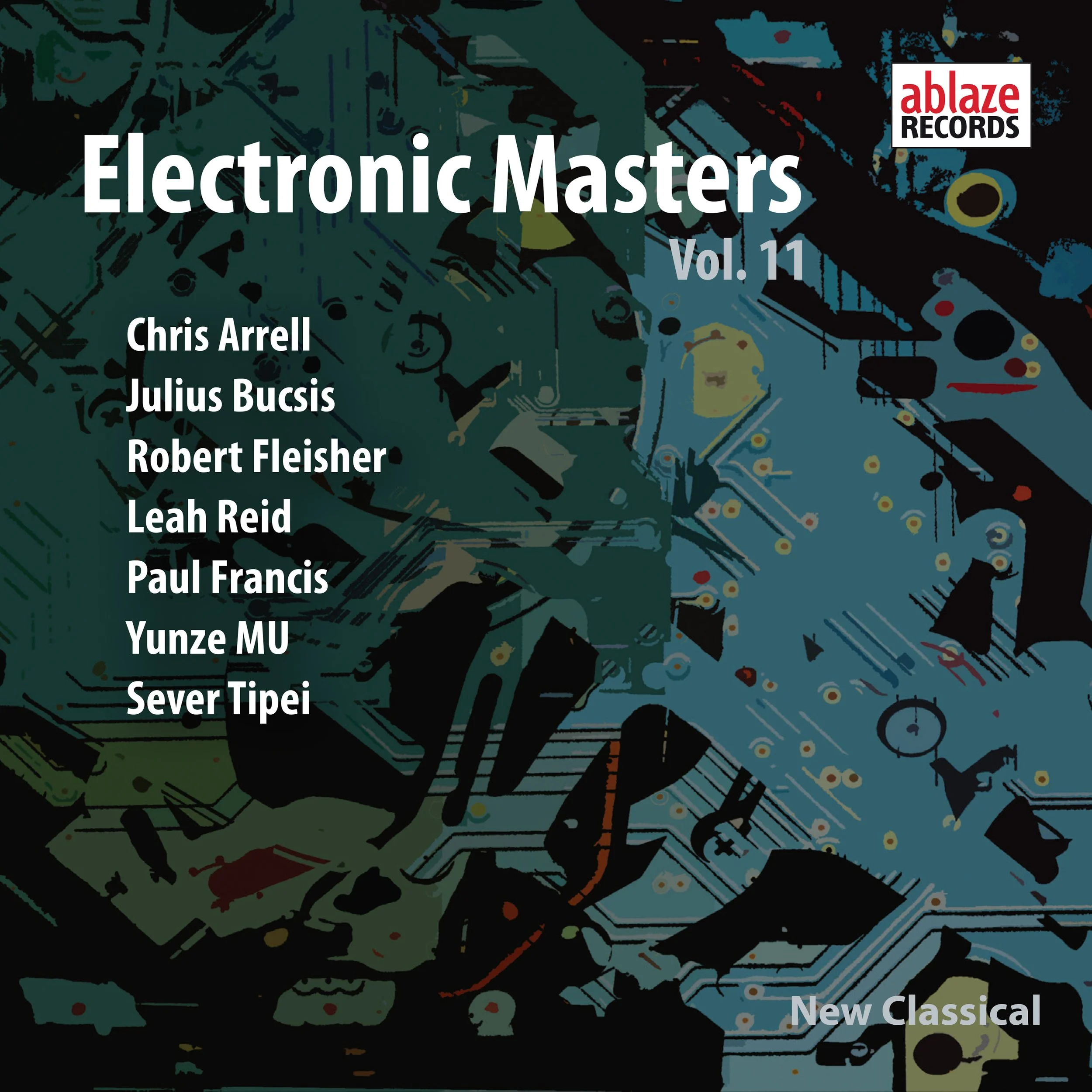
Spanning the globe and a wide aesthetic spectrum, Electronic Masters Vol. 11 delivers exciting, vivid new works from composers Chris Arrell, Julius Bucsis, Robert Fleisher, Leah Reid, Paul Francis, Yunze Mu, and Sever Tipei.
Chris Arrell
Chris Arrell is a composer whose music explores the boundaries between the human and the technological, the natural and the digital. His work encompasses composition, sound synthesis and computer music, reflecting his interest in the expressive possibilities of technology and the changing relationship between acoustic and electronic sound.
Julius Bucsis
Julius Bucsis is a composer, guitarist and music technologist whose work combines acoustic instruments, electronics, fixed media and electric guitar with computer processing. His interests include computer-based composition and performance, improvisation, interactive music and the exploration of new musical forms.
Robert Fleisher
Robert Fleisher is a composer whose work encompasses acoustic and electroacoustic music. His electroacoustic works are noted for their distinctive, tactile sonorities, while his broader compositional output reflects a sustained interest in expressive musical language and unconventional approaches to sound.
Leah Reid
Leah Reid is a composer, sound artist and researcher whose work ranges from acoustic and vocal music to acousmatic, electroacoustic and interactive sound installations. Her compositional research centers on timbre and its relationship to sound, space, time, perception and color.
Paul Francis
Paul Francis’s work engages with electronic and sound-based media, including sonic installation, reflecting an interest in contemporary approaches to technology, sound and musical experience.
Yunze Mu
Yunze Mu is a composer, music programmer and sound artist whose work explores computer music, electronic sound, interactive media and immersive environments. His projects encompass fixed media, live electronics, multimedia performance and virtual reality, bringing together musical composition and technological experimentation.
Sever Tipei
Sever Tipei is a composer and theorist whose work has been central to the development of computer music and computer-assisted composition. His practice encompasses algorithmic composition, digital sound synthesis and sound design, including pioneering work with computer-based systems developed at the University of Illinois and Argonne National Laboratory.
OUT NOW
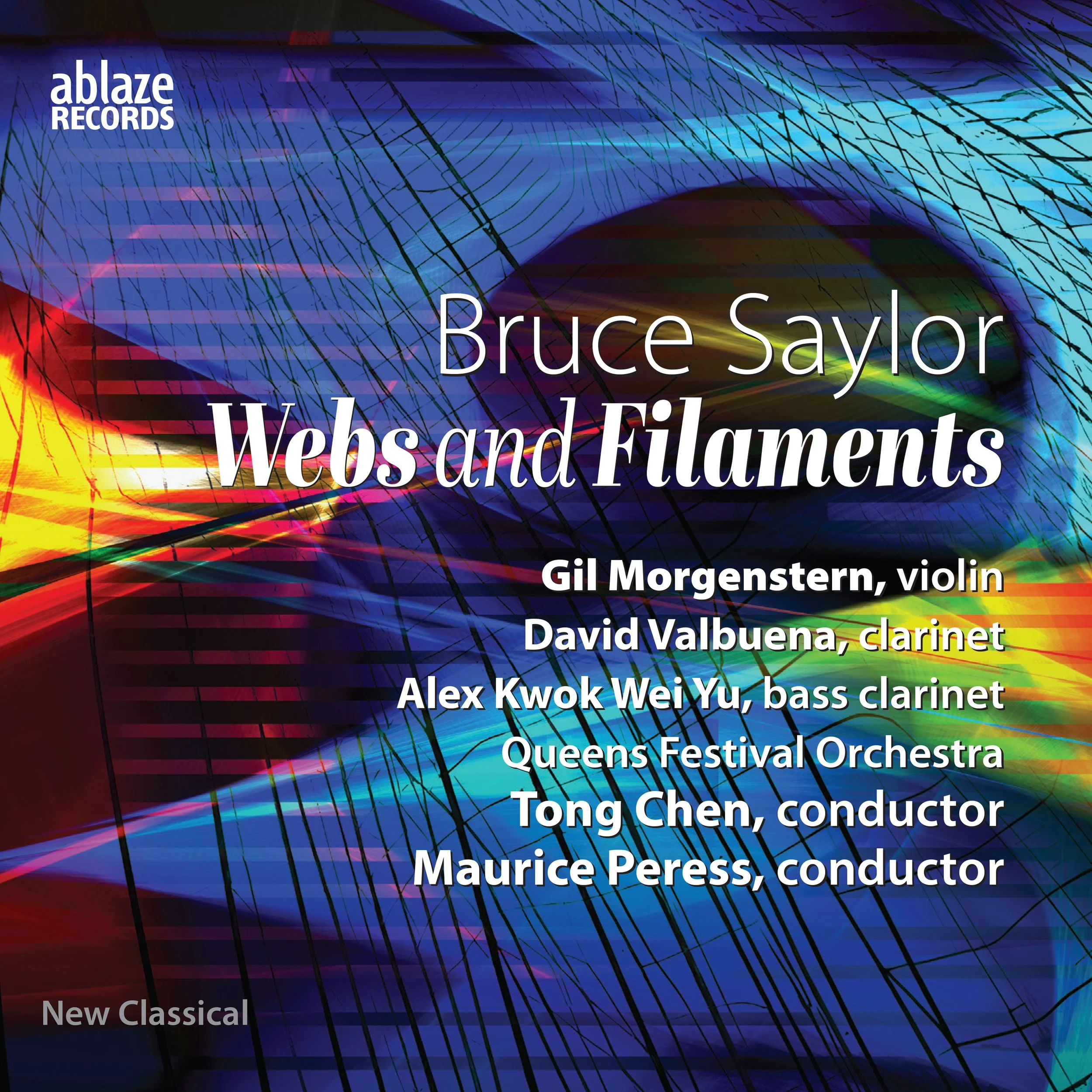
This recording presents three works that trace a compelling artistic arc—from early lyricism to mature, color-rich modernism—by a composer whose music unites structural rigor, expressive intensity, and historical awareness.
At its center is the Violin Concerto (2017–19), a virtuosic and dramatic work inspired by the incandescent playing of Gil Morgenstern. Composed over several years and shaped through live workshops and performances, the concerto balances free atonality with distinct pitch centers drawn from the form generating models of the great violin concertos of the past. Its three movements range from explosive rhythmic drive and cumulative passacaglia forms, through an introspective and glowing Largo, to a dazzling Tarantella that recalls the bravura traditions of the nineteenth century—reimagined through a contemporary lens. The concerto’s lean, transparent orchestration heightens both clarity and intensity, while its lineage quietly acknowledges the influence of Stravinsky and Roger Sessions.
Cantilena for Strings (1965), written during the composer’s first year at Juilliard, reveals an early mastery of line, counterpoint, and expressive restraint. Its interweaving string textures, modal warmth, and gently inflected chromaticism create a music of introspective beauty and lasting appeal. First performed in 1965, Cantilena has since become one of the composer’s most frequently performed orchestral works and remains a favorite with string ensembles.
Completing the program is Ritual, a darkly evocative chamber-orchestra work born from collaboration with the clarinetist Arthur Campbell. Scored for clarinets, strings, and vibraphone, the piece unfolds as a dramatic procession: brooding sonorities give way to virtuosic flourishes, kinetic motion, and a transformed return that dissolves into hushed resonance. Its title and atmosphere reflect a distant kinship with Stravinsky’s Le Sacre du printemps, filtered through an unmistakably personal voice.
Conducted by Tong Chen and Maurice Peress, this recording captures music that is visceral yet refined, intellectually engaging yet immediately communicative in pristine audio that presents this music with highly detailed and powerfully dynamic color and texture.
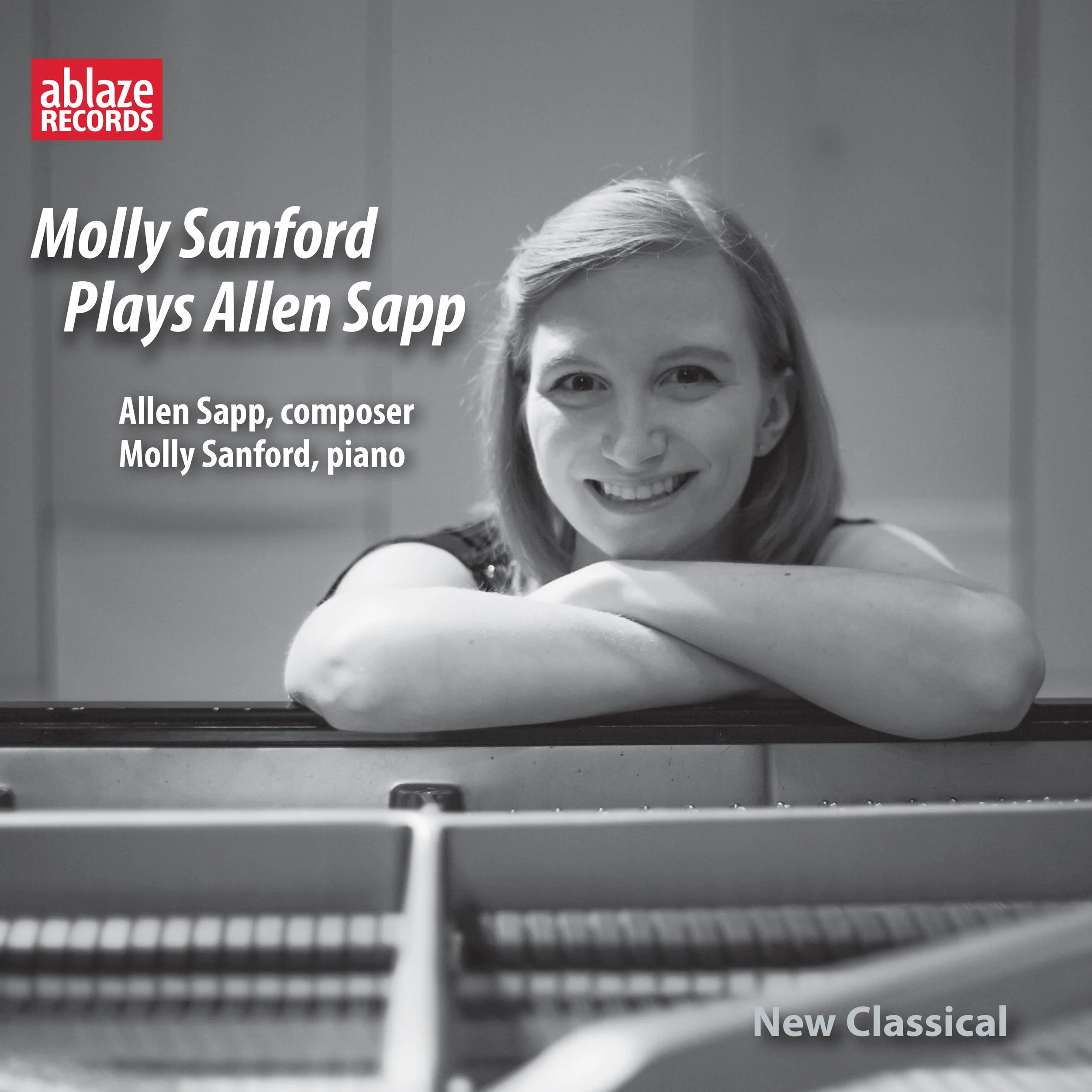
Discover the captivating artistry of Allen Sapp through the masterful performance of pianist Molly Sanford in the album Molly Sanford Plays Allen Sapp. This compelling collection showcases the depth and diversity of Sapp’s compositional voice, featuring works that span a broad emotional and stylistic spectrum.
Experience the lyrical beauty and technical brilliance of the Suite for Piano and the engaging charm of Piano Sonatina I. Journey through vivid musical narratives in Four Scenes and One Act, and be moved by the delicate expressiveness of Rose Petals Falling. The album also presents the intricate and evocative Seven Bagatelles alongside the spontaneous and imaginative Four Impromptus. Delve into the dramatic intensity of Fantasy I: “The Pursuers”, and conclude with the profound complexity of Piano Sonata no. 1.
Molly Sanford’s nuanced interpretation breathes life into each piece, offering listeners an immersive and rewarding experience of Allen Sapp’s piano repertoire. A must-have for aficionados of contemporary classical music and those seeking a fresh perspective on modern piano works.
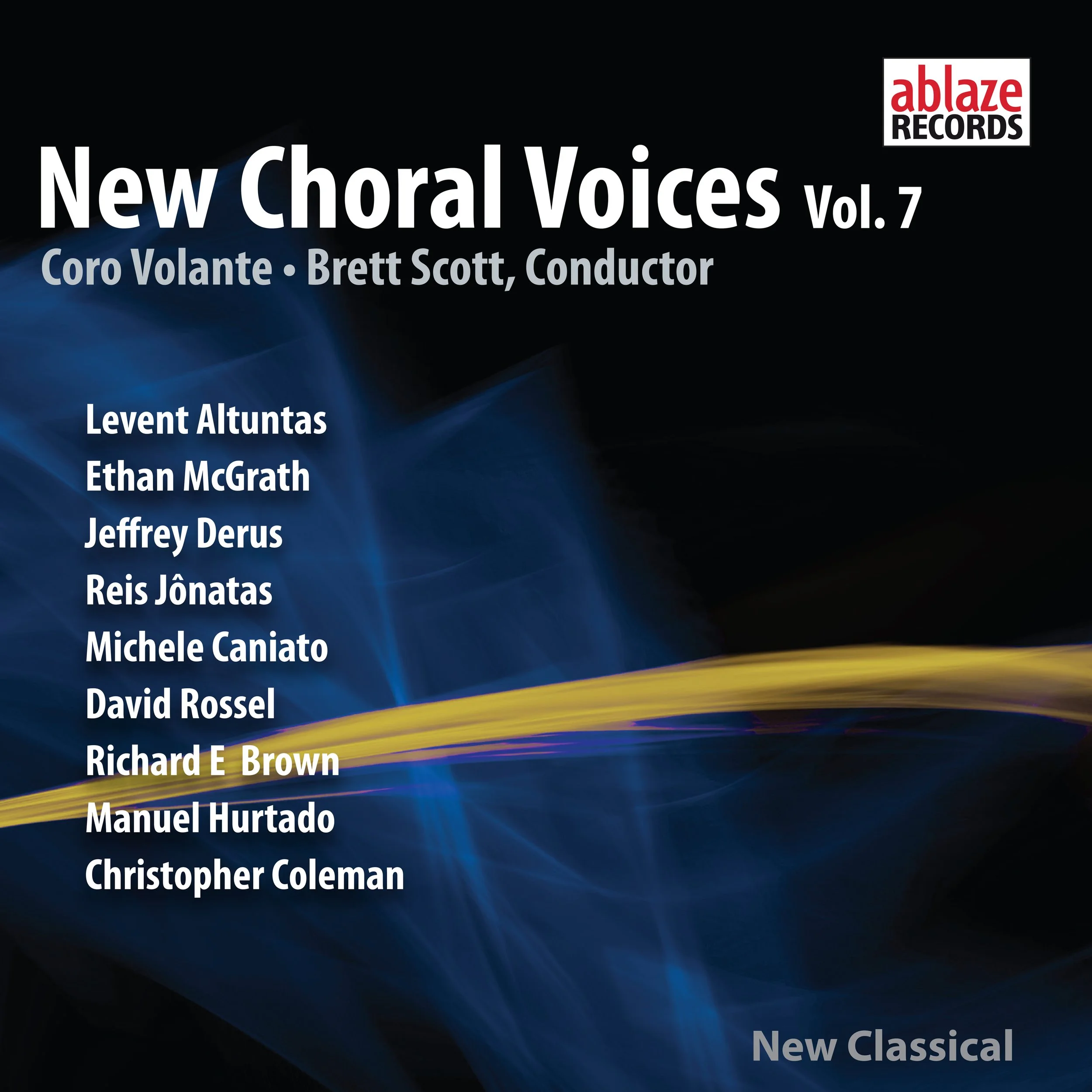
Ablaze Records proudly presents its latest release—an extraordinary collection of masterfully crafted choral interpretations, bringing to life new works by composers from across the globe.
From the first track, the artistry of Coro Volante illuminates each score with sensitivity, clarity, and expressive depth.
Levant Altuntaş’ Cradle Song opens the disc with luminous lyricism—an intimate, harmonically rich lullaby delivered with soul-stirring warmth.
Ethan McGrath’s A Child of the Snows showcases radiant melodic invention, allowing Coro Volante’s sections to shine in a display of precision, blend, and breathtaking virtuosity.
Jeffrey Derus contributes two works: I Know You—a tapestry of poignant textures and shifting harmonies that carves a deeply emotional arc—and The Lamb, whose crystalline counterpoint and luminous part-writing reveal the composer’s rare gift for clarity and expressive restraint.
Reis Jônatas’ Laudate Dominum bursts forth with rhythmic vitality and inventive fragmentation, its energy both infectious and artfully constructed. His later contribution, Ubi Caritas, unfolds in chromatic lines and radiant harmony, distilling the essence of devotion into a luminous soundscape.
Michele Caniato’s Ao Viandante, the disc’s most daringly expansive work, deploys spatialized forces and layered textures with striking dramatic impact—brilliantly captured in Ablaze’s rich and detailed recording.
David Rossel’s Eleventh Hour transforms a graphic score into a vivid choral realization, brimming with spontaneity and interpretive joy.
Richard E. Brown’s Alleluia turns a single sacred word into a multidimensional meditation, sculpted through shifting textures and profound dynamic shading.
Manuel Hurtado’s A Better Resurrection glows with optimism and lyric grace, its varied choral writing bringing freshness and immediacy to Christina Rossetti’s text.
Christopher Coleman’s Sing Unto the Lord a New Song closes the program with exhilarating propulsion and imaginative freedom, a jubilant celebration of invention and surprise.
This disc is a testament to the power and refinement of contemporary choral composition. Each setting elevates text into luminous artistry, weaving intricate harmonies, daring textures, and profound emotion into sound worlds that are at once timeless and new. Coro Volante’s interpretation, paired with Ablaze’s pristine recording, makes this release an essential document of choral music at its most inspired and artful.

Ablaze Records is proud to announce the upcoming release (JULY 18, 2025) of Symon Clarke’s Concerto for Violoncello and Orchestra, subtitled Tupaia’s Map, featuring the renowned cello soloist Alexander Baillie and the Royal Scottish National Orchestra. This thrilling work weaves together brilliant textures and an expressive intensity, bringing Clarke's vivid sonic landscape to life.
The Concerto for Violoncello and Orchestra (Tupaia’s Map) serves as a remarkable testament to Clarke’s ability to translate rich narratives into the musical realm. The concerto beautifully unfolds a sonorous tapestry, where Baillie’s dark and wondrous cello artistry navigates through emotional valleys and soaring heights. The eloquent interplay between the soloist and the orchestra showcases not only the virtuosity of the performer but also the intricate dialogue within the ensemble, delivering a gripping listening experience.
The work captures the essence of place, identity, and orientation of the self within and environment. Clarke’s meticulous attention to orchestral color and texture invites listeners to reflect upon the cultural significance of travel and mapping. Both the mapping of the external for the purposes of navigation, but also a more personal navigation of the emotional and expressive internal. This evocative and unique musical conception makes Concerto for Violoncello and Orchestra (Tupaia’s Map) a resonant addition to contemporary classical repertoire.
In addition to the concerto, the disc also features Clarke's Three Orbits, a striking symphonic composition comprised of three movements: Iapetus, Hyperion, and Tethys. Each movement presents its own unique emotional landscape, structured with vivid contrasts that delve deeply into the celestial themes suggested by their namesakes.
Iapetus, the first movement, evokes a sense of vastness and quiet mystery, utilizing open textures and haunting melodies to create an atmosphere of introspection. The second movement, Hyperion, explodes with vitality, characterized by rhythmic energy and dynamic orchestration, representing the Titan's regal and powerful nature. Finally, Tethys casts a serene reflection, with gentle swells and lyrical lines that conjure the nurturing essence of the oceanic deity.
Together, these movements in Three Orbits exemplify Clarke’s distinct compositional voice, showcasing his unique ability to blend shape, texture, and emotional impact. As with Concerto for Violoncello and Orchestra (Tupaia’s Map), these works reflect a deep engagement with narrative and environment, underscoring the inherent connections between music, nature, and humanity.
This premiere recording of Symon Clarke’s Concerto for Violoncello and Orchestra (Tupaia’s Map) and Three Orbits promises to resonate with both seasoned concert-goers and new listeners alike. Joined by the Royal Scottish National Orchestra along with Alexander Baillie this disc provides a searing insight into the world of a distinctive, serious, and highly individual music voice of Symon Clarke.

Introducing Orchestral Masters Vol. 11 – the latest addition to our renowned collection designed for composers seeking to elevate their music to new heights. These meticulously crafted recordings feature a rich array of orchestral styles and sounds, encompassing a wide range of dramatic and emotive expressions from composers from around the world. You will revel in the bold dynamism of how composers Martin Hebel, Ayaz Gambarli, Lisa Nardi, David Rossel, Michael Timpson, and Douglas Knehans freely and colorfully use the splendid resources of the famed Brno Philharmonic Orchestral under the razor sharp direction of Mikel Toms and the Kyiv Philharmonic under the direction of Robert Ian Winstin!
With Orchestral Masters Vol. 11, each work has been expertly recorded in a professional studio environment, ensuring that every note resonates with authenticity and warmth.
Don't miss out on the opportunity to Listen to these outstanding compositions. Elevate your listening experience with Orchestral Masters Vol. 11!

An astounding range of new electronic works by composers throughout the world.
Ablaze Records Presents: Electronic Masters Vol. 10
Dive into an extraordinary auditory journey with Electronic Masters Vol. 10, showcasing the groundbreaking compositions of some of today's most innovative artists. This album encapsulates a rich tapestry of electronic music, highlighting the diversity, timbral intricacies, and expressive range that contemporary sound art can achieve.
Experience Julius Bucsis’s Sentinels Along the River of Time, where cinematic soundscapes interplay with ambient textures, guiding listeners through a reflective passage of time. Christopher J. Greco’s Voices 1-for piano and electronics masterfully intertwines classical piano with electronic elements, creating a dialogue that is at once intimate and expansive.
Renzo Leveroni’s oleaje offers a dynamic exploration of waves and rhythms, immersing you in a sea of layered sonic colors. Adam Melzer’s Processing Request combines glitch aesthetics with lush harmonies, challenging and redefining the boundaries of interaction in music.
Masafumi Oda’s circulation in and for turbulence IV invites you to engage with a relentless ebb and flow of sound, mirroring the tumultuous nature of turbulence itself. Leah Reid's Reverie presents a dreamlike experience, blending ethereal tones to transport listeners to another realm.
Kyle Vanderburg’s Tape Piece taps into the nostalgia of analog methods while infusing contemporary methods, producing a unique auditory reflection. Finally, Clemens von Reusner’s Anamorphosis challenges perception through innovative composition, encouraging listeners to explore the multifaceted nature of sound.
Electronic Masters Vol. 10 is not just an album; it's an invitation to explore the boundaries of sound and emotion. Celebrate the impressive range and creativity within the electronic genre, delivering an unparalleled listening experience that resonates long after the last note fades through our latest release.
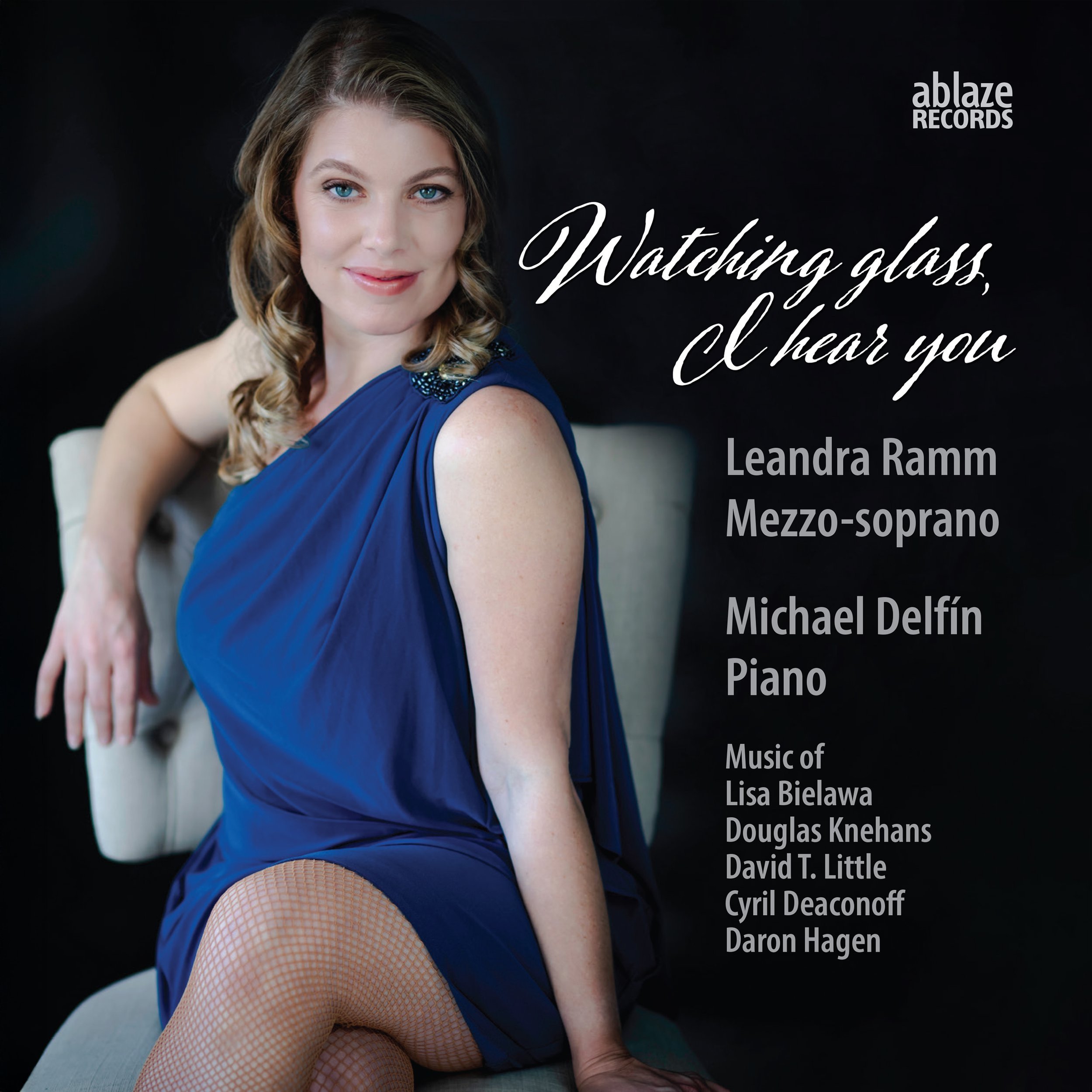
Rising stars mezzo-soprano Leandra Ramm and pianist Michael Delfín perform a wide range of vocal works by some of today’s leading, living composers.
Experience an recording of contemporary music as Leandra Ramm and Michael Delfín present works for mezzo-soprano and piano by some of today’s most innovative living composers. This project features acclaimed pieces by Lisa Bielawa, Douglas Knehans, David T. Little, Cyril Deaconoff, and Daron Hagen, showcasing the unique talents of these creators who are defining the future of classical music.
Leandra Ramm, known for her dynamic vocal prowess and expressive interpretation, will captivate listeners with her ability to breathe life into contemporary compositions. Accompanied by the artistry of pianist Michael Delfín, whose pianistic skills complement Ramm’s voice with sensitivity and flair, this duo delivers a compelling musical experience.
From Bielawa’s thought-provoking narratives to the captivating rhythms and textures of Knehans, every piece performed will evoke a spectrum of emotions, inviting the audience on a journey through the artistry of living composers. David T. Little’s intimate and expressive solos and Cyril Deaconoff’s lyrical nuances, alongside Daron Hagen’s evocative storytelling, highlights the depth and diversity of contemporary music.
This distinctive recording not only showcases the talents of Leandra Ramm and Michael Delfín but also celebrates the bold, new voices shaping the landscape of classical and modern music today. Don’t miss the chance to audition this convergence of artistry—where tradition meets innovation, and the untold stories of our time come to life through song.

In ABLAZE Records first release of new wind ensemble music diverse and dramatic works by Jeff Vitucci, Allen Moline, and American Prize winner Andres Luz are given exacting and brilliant performances by the CCM Wind Symphony under the direction of internationally acclaimed conductor Kevin Michael Holzman. Joined by veteran soloists Michael Morgan (trumpet, and Timothy Anderson (trombone), this disc is one to savor over and again!
RECENT RELEASES
With his signature instrumental flamboyance and skilled, eloquent, musical voice, British composer Symon Clarke delivers yet another astounding and vivid collection large chamber ensemble works.
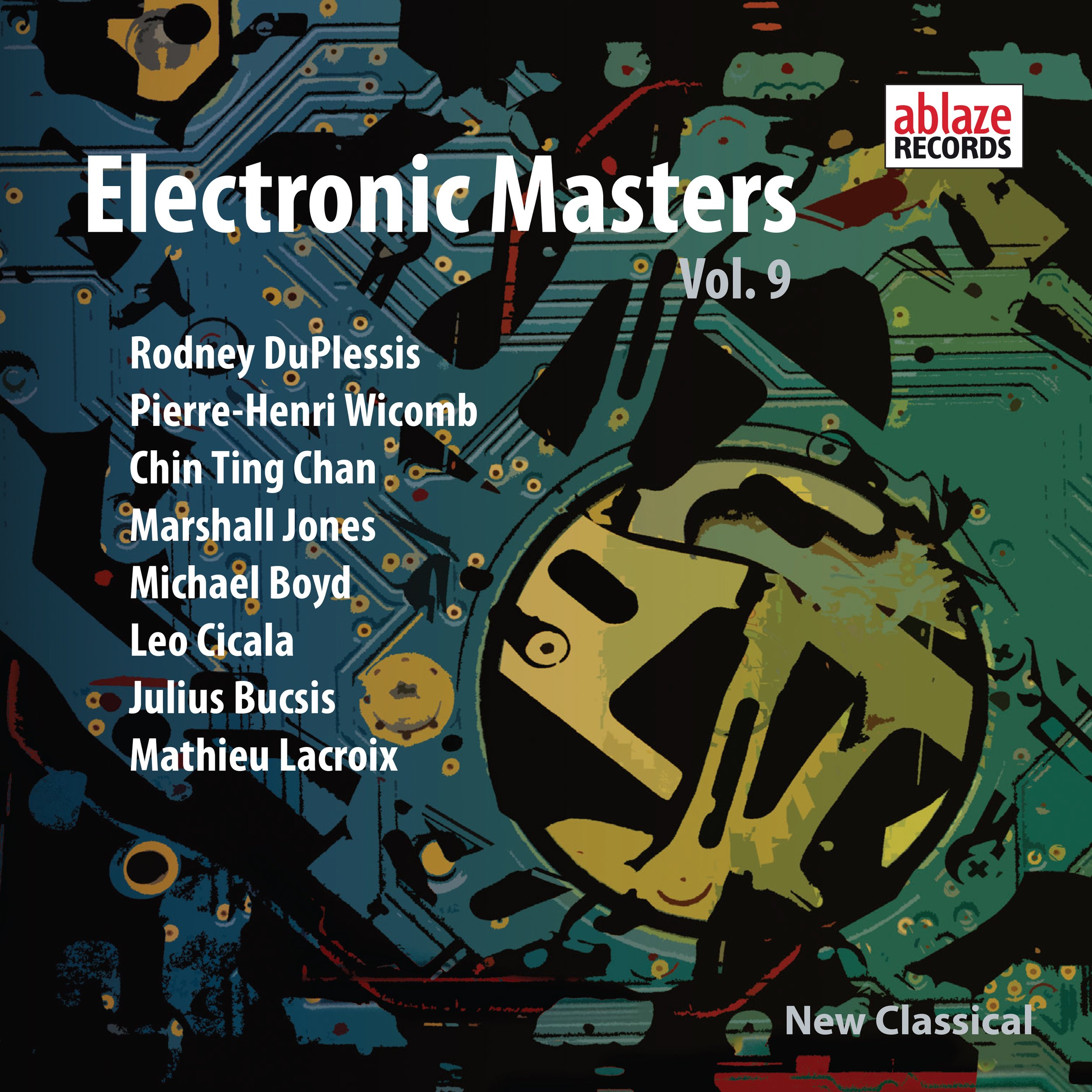
In ABLAZE Records ninth volume of classical electronic music we hear music from the USA, South Africa, Canada, Italy, and Norway on this brilliant and varied disc.
With works from composers from the USA, Canada, Italy and South Africa this new collection of classical electronic music is truly spectacular.
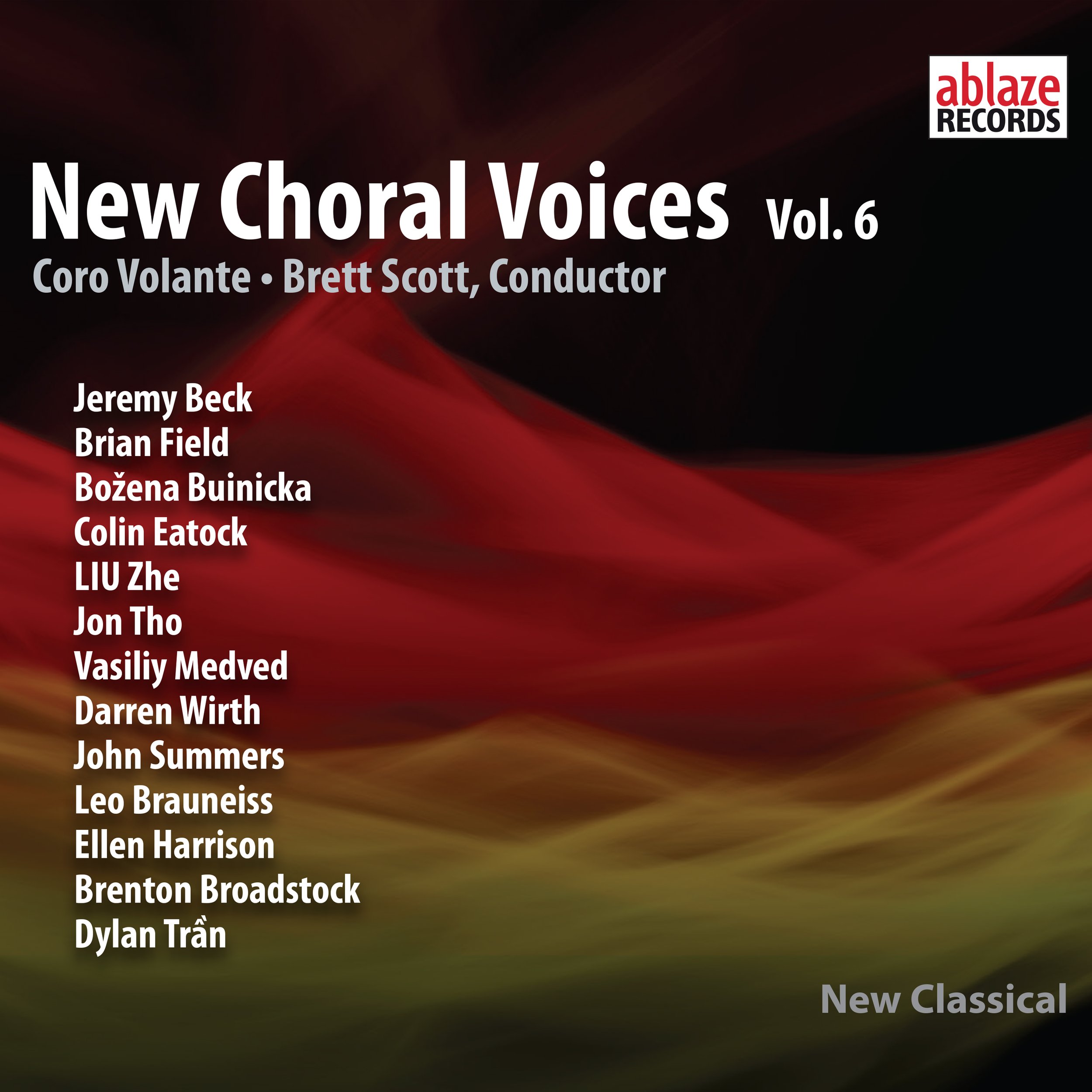
In an expansive disc covering works by THIRTEEN composers from around the world ABLAZE releases it’s SIXTH Volume of superbly rendered recordings of choral music by living composers.
With a huge variety of compositional voices from the USA, Lithuania, Canada, China, Singapore, Ukraine, Australia, Vietnam and Austria, this disc paints a vivid picture of choral music across the world today.
Deus et Machina, the second commercial recording release for the CCM Chorale, is (as reflected in its title—God and the Machine) a collection of sacred texts for choir, electronics, and additional instruments. With one exception, these are all world premiere commercial recordings.
The texts these composers chose to set draw from four different religious traditions. In the Beginning of Creation, Two Anthems (Yeow/Pax), and The Blessing of Aaron set texts from the Hebrew Scriptures, the first two in English, the last in Hebrew. Seven Last Words of Jesus Christ from the Cross uses texts from the Gospels in the original Aramaic. From the Tibetan Book of the Dead and Heart Sutra set texts from the Buddhist tradition, from Tibet and from Japan respectively. Shavad sets a text by Rumi, the great medieval Sufi mystic and poet.
AVAILABLE NOW exclusively on ABLAZE!
Ablaze Records releases the tenth album of its innovative Orchestral Masters series worldwide on 17 March 2023. Performed by the Royal Scottish National Orchestra conducted by Mikel Toms, it features music by composers from the USA (Edward Smaldone, Jeffrey Holmes, Jason Phillips), Cem Güven (Turkey/UK), Fang Ke and Zou Hao (China/USA) and Hojin Lee (South Korea/USA).
American violinist and viola player Davis Brooks records all the parts in the music on album Lines from Poetry, released by US label Ablaze Records on 10 March 2023, featuring composers Filipe Leitão (Brazil), Richard Einhorn, Ronald Caltabiano, Frank Felice (USA), Balee Pongklad (Thailand/USA). Digital distribution by Ulysses Arts.
Davis Brooks comments:
'It become commonplace for many artists to produce a “covid project,” - this is mine. The Pandemic gave me the opportunity to collaborate personally with five composers in recording their music, resulting in a wide assortment of musical styles.
Two works, String Samba and Two by Four, were projects enabling me to explore performing and recording all the parts, enabling me to control every interpretive and technical variable. String Samba originally was intended to be performed by a traditional string quartet, but Filipe and I were intrigued by the possibility of a three violin and viola format. In addition to the original scored notation, I recorded additional ponticello and pizzicato effects and the piece was reinvented anew.
The recording of Two by Four, like String Samba, became a late-night home studio project. Having been part of the première of Two by Four in 2004, I simply wanted to record a version where I played all of the parts, and to see where my own interpretation might go.'
(Davis Brooks)
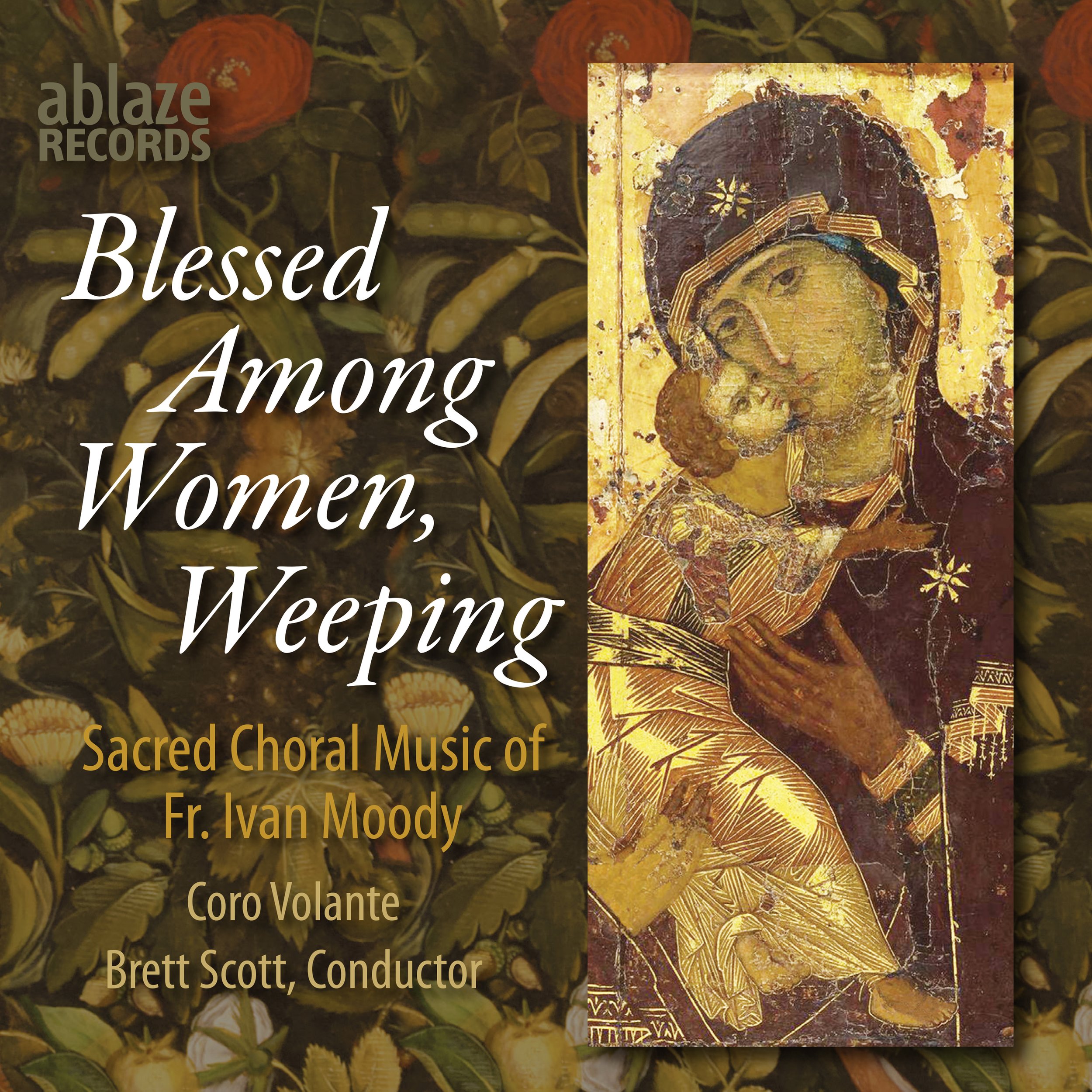
Eight new beautiful choral works from Fr. Ivan Moody.
Ablaze Records releases the ninth album of its innovative Orchestral Masters series worldwide. Performed by the Brno Philharmonic Orchestra conducted by Mikel Toms, it features music by composers Jacob Beranek, Miho Sasaki, Randa Kirshbaum, Micahel Schelle, James Ricci, Steven Stanke, and Kristian Schembi in a disc that ranges from intimate to dramatic, lyrical to humorous. Seven highly individual voices available only on ABLAZE Records.

A tour de force set of performances by Australian bassist extraordinaire Robert Nairn. Through his collaborations with composers Barsom, Balliett, Askim, Knehans, Gershon and Millet, Nairn ranges across repertoire from concerto to sonata, from duo to work with electronics.
This is a remarkable journey for any listener wishing to hear how brilliant an acoustic double bass can be in all of these varies guises.

Another stunning volume of works from composers from around the world.
Martins Vortex Cantabilis is a powerful and colorful setting of a chant written by Alfonso X, the king of Castile in the 13th century.
Following this is the gorgeously colored and atmospheric Blue Fire of Wav Leung William So.
Nardi’s Upon An Ocean is an expressive and tender depiction of the sea coming into storm.
Geng Li’s work A Slow Piece for String Orchestra “January 2020” is a darkly passionate rumination on the world and the manner in which humans impose upon and fight against nature.
Marshall Jones’ Paramnesis is about distorted and lost memories and this becomes a compositional approach for this spectacularly colored and dramatic orchestral essay.
Richard E Brown’s Serenata for Strings is cast in five movements: Prologue, Scherzo, Nocturne, Tarantella and Epilogue. Inward and emotional this multi movement work is powerful statement from composer of depth and substance.
Ivana Vojnović’s Sinfonietta is a four movement work striking a lighter, more ebullient tone and full of energy, optimism and delightful color.
Listen to these tremendously diverse and talented composers for their remarkably resourceful and inventive use of the tremendous orchestral resource that is the Brno Philharmonic.
ABLAZE’s fourth volume of exciting and diverse new works for Pierrot Ensemble by composers from around the world.
The disc opens with Singaporean Jon Tho’s dreamlike portrait of Iceland in ICELANDIC SEA BREEZE II. The focus of this work is to evoke the beautiful imagery of Iceland through Tho’s compelling and inventive aural landscapes inspired by the stark beauty and timeless organicism of Iceland.
Multi-award winning composer Joungmin Lee’s work ABANDONED also draws on imagery as a catalyst for his sound world. Unlike Tho’s work preceding it, Lee’s vision is a darker one of an abandoned world of deserted industry and emptied buildings, displaced persons and homeless animals existing in a lonely and despairing landscape. Despite this evocation, Lee’s sonic world is brilliant, abstract and surprising without covering the main theme of his intriguing and world of textures, themes and ideas.
Kristin Kirk’s multi-movement work THE ENDING SUITE—LAST OF ITS KIND pays homage to the idea and reality of extinction as a theme with the central idea that no creature knows when it is the last representative of its species. This is overtly address in the first movement NO CREATURE EVER KNOWS IT’S THE LAST OF ITS KIND which explores a single idea rooting and re-rooting itself in different contexts. In IT JUST IS is a more lively movement as if to say the now is all that there is with its focus on jaunty rhythms and sparkling colors. The final movement AND THEN IT ISN’T recalls music from the first movement yet in a deeper context that unfolds, much like extinction itself, until a sudden stop.
Hugh Collins Rice (United Kingdom) draws on Medieval and Renaissance music and blends this with a modern lyricism that is striking in its individuality. It is unsurprising therefore that his COELI (Instrumental motet) transforms a traditionally vocal form into and instrumental one while modeling the whole work on the plainsong Easter hymn Regina Coeli Laetere (Rejoice, O Queen of Heaven).
Peruvian composer Claudia Alverez’s AVERNO CITADINO (CITY HELL) drives us into the frenetic world of the modern city, specifically that of Lima, Peru and even more specifically to one of that city’s business streets Javier Prado Avenue. Between the sheer volume of vehicles, the congestion, noise, tense jockeying for progress through the congestion and all accompanied by the noise and stress of brakes, car horns, police whistles, and engine noise, the work seeks to paint a picture of the ever pulsating ebb and flow of congested city life or, in this case, city hell!
South Korean composer Boram Kim’s THE DARK CITY is based on William Carlos William’s poem The Great Figure:
Among the rain
and lights
I saw the figure 5
in gold
on a red
firetruck
moving
tense
unheeded
to gong clangs
siren howls
and wheels rumbling
through the dark city.
In this work Kim has sought to track to Williams’ masterful evocation with a particular focus on its closing couplet in seeking recreate in sound the unstable atmosphere created and felt both in the poem and through the composer’s music.
American composer David Lipten’s DOUBLE DOWN is modeled on the idea derived from blackjack but appropriated today mostly by politicians—that os underscoring or doubling down on a weak bet or false claim in the hope that it will be perceived as true. In Lipten’s work there is an artful doubling of instruments and instrumental lines converging to create new sonorities as they fold into and out of each other creating their own type of sonic lie—being not one instrument nor the other but a type of new instrument conceived through doubling down on a line or musical idea such that we are made to aurally believe the falsehood of the combination as a singularity. Lipten deploys this technique with an immense and masterful naturalness and ease giving the work an organic inevitability that it simply could not be any other way or take any other form. The expressive world of the piece is also one of immediacy and brilliance, drama and color all wrapped up in a musical expression that is both serious yet immediately and always engaging.
“...an impressive work by Douglas Knehans, an ever-challenging, ever-surprising musical artist.”

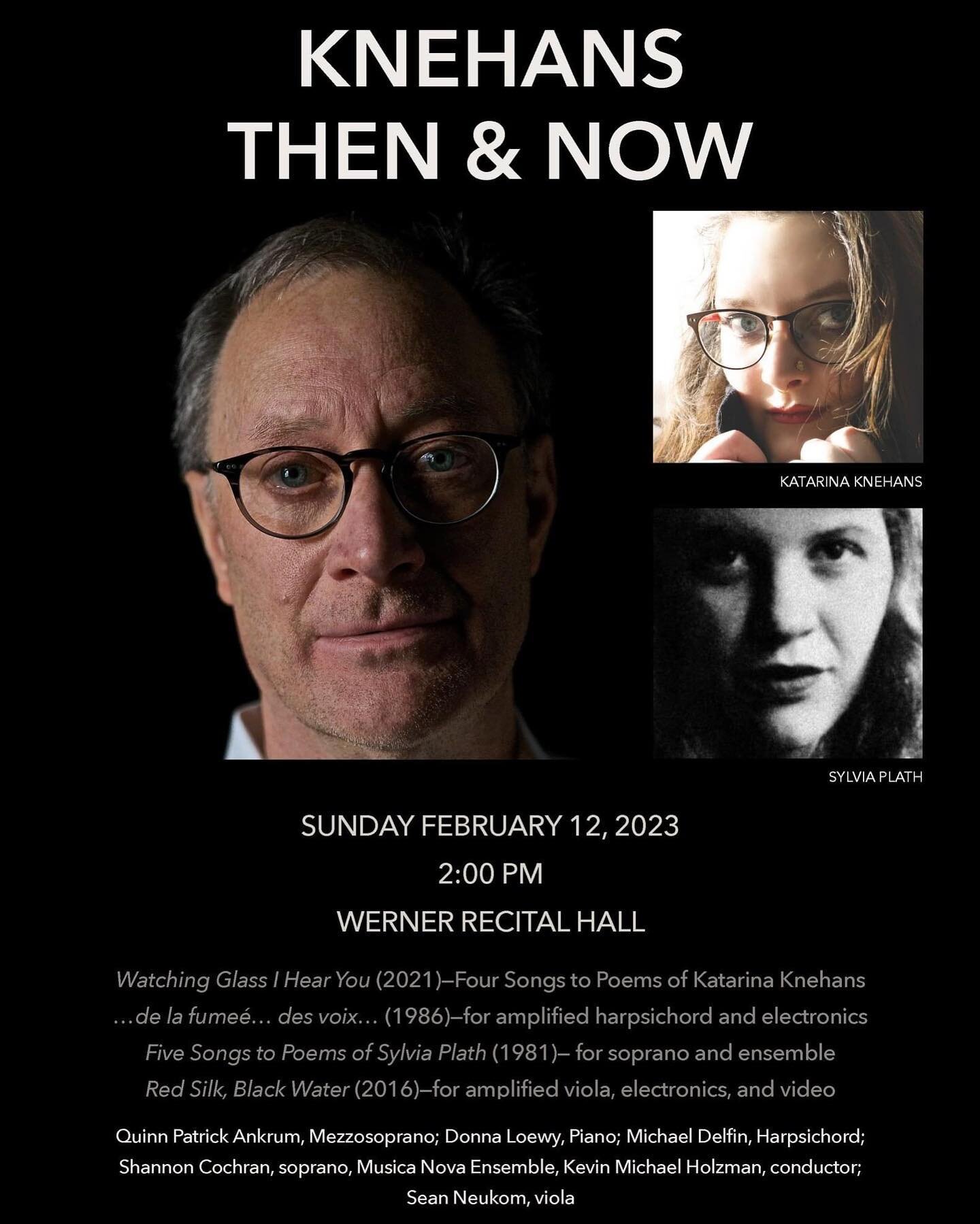
An evocative journey into the delicate and emotional world of composer Douglas Knehans and writer Katarina Knehans.
This disc explodes with electric performances by the Brno Philharmonic, violin soloist Pavel Wallinger and stunning young soprano Judith Weusten under the propulsive and imaginative baton of conductor Mikel Toms.
HIGHLY RECOMMENDED
EXCITING AND PASSIONATE NEWEST RELEASES

In our second volume of works for sinfonietta, we feature four tremendously contrasted composers: Andriy Igorovich Sovetov’s On the Lighter Side for sinfonietta and solo piano which, true to it’s title is a breezy short essay for piano and sinfonia; Andrew Lewinter’s Neo-classical Nonet for flute, oboe, clarinet, bassoon, horn, violin, viola, cello and double bass—a tremendously effective and engaging new work; Alan Jones’ Three Times Five a rhythmically propulsive romp for fifteen instruments; and the disc concludes with an unusual concerto for piccolo and chamber orchestra by Edward Smaldone, Life Imagined, Life Engaged, here given a wondrous interpretation by piccoloist Frantisek Kantor in a gleaming new recording.


In our second volume of works for sinfonietta, we feature four tremendously contrasted composers: Andriy Igorovich Sovetov’s On the Lighter Side for sinfonietta and solo piano which, true to it’s title is a breezy short essay for piano and sinfonia; Andrew Lewinter’s Neo-classical Nonet for flute, oboe, clarinet, bassoon, horn, violin, viola, cello and double bass—a tremendously effective and engaging new work; Alan Jones’ Three Times Five a rhythmically propulsive romp for fifteen instruments; and the disc concludes with an unusual concerto for piccolo and chamber orchestra by Edward Smaldone, Life Imagined, Life Engaged, here given a wondrous interpretation by piccoloist Frantisek Kantor in a gleaming new recording.

In this eighth volume of groundbreaking electronic and electroacoustic music we feature four new works from the studios of composers Chun Eun Kim (Korea)—PianoForte; Spiros Mazis (Greece)—Beings on the Rocks; Jacob Elkin (USA)—Feedback Study 2; and Sarah Kierle (UK)—Okypete and Aello; in addition to new works with instruments and interactive electronics Zhixin XU (China)—La Nuit Bleu for harpsichord and interactive electronics and Adrian Borza (Romania)—If for oboe and interactive electronics.
Discover these pioneering and effective new works using electronics in inspiring new ways.


ABLAZE Records seventh volume of unique contemporary works for orchestra features Derek M. Jenkins fanciful takes on his snapshot memories of his childhood in Of Vigils and Storms; Jeremy Piper’s colorful and evocative suite on the legend of Yasparia in his Gated Mountains of Yasparia; Hong Kong composer Roger Fong’s beautiful and imagistic Rhapsody on a Night by the Maple Bridge; Heather Niemi Savage’s folk tune inspired Daughter of the Stars; Australian Sally Greenaway’s powerful and lyrically melodic Worlds Within Worlds and Marco Muilwijk’s inventively scored and gorgeously colored Fantasy for Orchestra.
As usual, the tremendously artful and skillfully precise maestro Mikel Toms leads the virtuosic Brno Philharmonic Orchestra in this wonderful disc of premier recordings. Highly recommended!
ABLAZE Records seventh volume of unique contemporary works for orchestra features Derek M. Jenkins fanciful takes on his snapshot memories of his childhood in Of Vigils and Storms; Jeremy Piper’s colorful and evocative suite on the legend of Yasparia in his Gated Mountains of Yasparia; Hong Kong composer Roger Fong’s beautiful and imagistic Rhapsody on a Night by the Maple Bridge; Heather Niemi Savage’s folk tune inspired Daughter of the Stars; Australian Sally Greenaway’s powerful and lyrically melodic Worlds Within Worlds and Marco Muilwijk’s inventively scored and gorgeously colored Fantasy for Orchestra.
As usual, the tremendously artful and skillfully precise maestro Mikel Toms leads the virtuosic Brno Philharmonic Orchestra in this wonderful disc of premier recordings. Highly recommended!
In another wonderful series of recordings from CORO VOLANTE, this disc highlights tremendous variety of approach to massed voices that is truly inspiring.
Mari Kotskyy’s I Sing of a Maiden is a setting of a Middle English lyric poem which seek to capture the calmness and astonishment of the Virgin Mary as she learns she is to give birth to the Son of God.
James Sproul’s In This Short Life is a setting of two short poems by Emily Dickinson inspired by the composers loss of his cousin at a very young age—a moving and powerful work.
Flos Carmeli Antiphon is Paul Portelli’s setting for four voices of this text most frequently associated with the feast of Our Lady of Mount Carmel.
Kit Grahame’s The Tears of Two is a setting of Sonnet VI by Elizabeth Barrett Browning the subject of which is the power and force of enduring love.
Ed Frazier Davis’s Through the Wilderness of Worlds is a reflection on Davis’s four hundred mile pilgrimage from Pamplona to Santiago de Compostela. This mighty trek allowed the composer a unique experience of self and nature that he sets here to music in a work of utter beauty.
Vasiliy Medved’s Psalm 67 is a setting for choir and chimes the composer sees as an account of his personal redemption and is a tremendously evocative and emotional work.
Shuang Xu’s Enjoyment in Untroubled Ease is one of the best known work of Taoist literature. In his setting, Xu seeks to target a musical state of freedom and transcendence.
SangUn Kang’s Extraordinary Harmonical Alphabet Song is a literal setting of the English Alphabet that seeks, through different colors and harmonies and textures to create unique choral music that is bright, engaging, challenging and fun.
Ariel Sol Bertulfo Schwarz’s Willow Poem evokes the sense of depth and quietude of a lone willow tree standing stoically throughout the seasons.
Again, CORO VOLANTE rises to the extremely diverse challenges in this repertoire of new music by living composers!
“Unthemed anthologies of new music can be a difficult sell, but Brett Scott's Coro Volante set about these recent pieces with such enthusiasm and confidence that it's hard not to be beguiled. It doesn't hurt that there's some real talent on show among the composers as well. It's important to make clear that these aren't all very young composers. Ellen Harrison has been making remarkable music since the 1970's and her 'Music Is', which ends the set, represents a most welcome addition to her list. Likewise, the veteran Alan Goldspiel with 'Soldier of Mine' and Tim Knight's moving 'Requiem Aeternam'. There isn't a piece one wouldn't want to hear again. Crisply recorded in generous acoustics.”
—Brian Morton, Choir and Organ (on New Choral Voices Vol. 4)


In the fourth volume from the brilliant Cincinnati based choir CORO VOLANTE, conductor Brett Scott delivers tremendous performances in a collection of sacred and secular new works for choir in English, Latin and Polish. The disc also includes other approaches to text setting that are innovative and refreshingly original. A tremendous and inventive collection that is highly recommended.
OTHER NEW RELEASES

Simon Clarke
SONGS FOR THE LAST ACT
A powerful and intimate collection of song sets by British composer Symon Clarke. To texts by Lervatov, Celan and others Clarke portrays a dimming world of autumnal beauty and stark nostalgia brought to life by superb soprano Natalie Raybould and the gifted musicians of the Brno Philharmonic Orchestra conducted by Mikel Toms. HIGHLY Recommended.

A powerful and intimate collection of song sets by British composer Symon Clarke. To texts by Lervatov, Celan and others Clarke portrays a dimming world of autumnal beauty and stark nostalgia brought to life by superb soprano Natalie Raybould and the gifted musicians of the Brno Philharmonic Orchestra conducted by Mikel Toms. HIGHLY Recommended.
FANFARE MAGAZINE REVIEW
S. CLARKE—Songs for the Last Act
Secret Diversions.1 Time’s Eye.2 Requiem3 • 1–3Natalie Raybould (sop); 1–3Mikel Toms, cond; 1, 2Pavel Wallinger (vn); 1Misha Greco, 3Michal Hreno, 2Katarina Madanová (vc); 1Martina Matušínská, 2Petr Pomkla (fl); 1Lukáš Danhel, 2, 3Emil Drápela, 2, 3Jíří Sedláček (cl); 3Petr Hladik, 1Max Jopp (vib); 1Domenika Turková (hp); 2Tomoe Sonoda (perc); 2Jíří Hrouby (pn) •
ABLAZE 55 (71:01 Text and Translation)
Three song cycles appear here (in chronological order) from the talented British composer Symon Clarke (no relation). I previously enjoyed a disc of his music on this label in Fanfare 43:6; this one is no less stimulating.
The first cycle, Secret Diversions (2003–04), sets texts by the Canadian poet Denise Levertov, a writer who concentrated on the natural world in the microcosm of the space around her own house. The literary focus is very much on the animal and plant kingdoms. Clarke’s settings are beautiful, concise, and elusive. Structurally, he creates an arch around the fifth movement (“Three Short Solos”); each of these “solos” finds the voice accompanied by a solo instrument (flute, harp, and cello) so in a sense they are duos. They hold the source material of the cycle and in so doing hold the music’s “key.” Martina Matušinská is a fine flutist; Lukáš Danhel is an expressive cellist, while Domenika Turková creates droplets of purest beauty. The vocal line is expressive in a sort of post-Bergian way, and Natalie Raybould relishes each and every nuance. Clarke’s evocation of a liminal space in “Singled Out” is remarkable; he is a master not only of harmony but also of scoring, creating a gauze of sound which Raybould interacts and intertwines with.
We move more towards the world of humans with Time’s Eye (2005). Inspired by a trip to Poland and an encounter with Auschwitz, Clarke opted for texts by Paul Celan, adding two of his own which are to be spoken at the beginning and at the end, and two instrumental interludes. There is a new bleakness to the sound picture here. Arrivals at near-consonances in “Draft of a Landscape” add color to the palette rather than offer solace, while the cello solo “monologue” is beautifully, achingly phrased by Katarina Madanová. The strength of the performance is its sensitivity to instrumental color, the way the instruments relate to the colors of the voice. When the spoken mode of delivery returns at the work’s close, it is impressively powerful.
The areligious Requiem of 2016–17 sets only two poems by Osip Mandelstam, one from early in his career and one from the year before his death. The smaller instrumentation invites further intimacy but by no means reduces the emotional force of Clarke’s statement. Intriguingly, the first movement is based on and leads to a direct quote from Contrapunctus XIX from Bach’s The Art of Fugue, in response to the final lines of Mandelstam’s poem: “Why has the music stopped?/Why is there such silence?” With the second and final movement, there is a sudden whirlwind of sound, with Raybould hardening her upper register to match the sound of the instruments around her (it works superbly). When warmth arrives it feels like cold comfort, with the music quickly reverting to a more desolate arena.
This is poignant, important music from a fine composer who deserves more recognition.
Colin Clarke
Knehans Smaldone
DOUBLE PORTRAIT
Two ‘mini-portraits’ of composers Douglas Knehans and Edward Smaldone featuring the virtuoso young ensemble ALL OF THE ABOVE in performances of a really wide ranging set of works demonstrating the artistic power and sweep of these two American composers.

Two ‘mini-portraits’ of composers Douglas Knehans and Edward Smaldone featuring the virtuoso young ensemble ALL OF THE ABOVE in performances of a really wide ranging set of works demonstrating the artistic power and sweep of these two American composers.
FANFARE MAGAZINE REVIEW
I’ve never before encountered a release that paired two composers who are longtime friends, sometime colleagues, and admirers of each other’s works. But in 2017, when Douglas Knehans invited Edward Smaldone to be a visiting professor at the University of Cincinnati’s prestigious College-Conservatory, the ground for this release, titled Double Portrait, was established. We get four chamber works from each composer, and to add interest, Knehans wrote the program notes for Smaldone’s pieces and vice versa. Composers have often admired one another’s music, of course, and I wondered if this example led to a crossing of paths stylistically.
The word “like-minded” comes up in the program notes, and the ear does pick up similarities. There’s a liking for free tonality that tilts more toward diatonic than dissonant. Propulsive rhythms appear, along with a kind of continuous variation that often plays upon short motifs or note groups. Melody in any extended form is less prevalent than themes or sequences. When Knehans comments that Smaldone’s music has “immediate appeal and visceral claim,” he’s pointing toward the kind of impact that sharp contrasts, accents, and rhythms have. The same applies just as strongly to his own music.
I realize that I’m speaking in generalities. The essential resemblance here is actually a non-resemblance. Knehans and Smaldone write independently of conventional forms (sonata, theme and variation, fugue, tone rows, chromaticism), which therefore requires them to invent new forms for each piece. This they do quite ingeniously, but there’s a second requirement linked to the first. A new form must show the listener how to grasp it. A new-music audience has the disadvantage of not knowing a piece’s internal scheme the way its creator does. The piece has to say “Listen to this” with something appealing to offer.
Let me pick four works that do just that. The two most exotic ones belong to Knehans, thanks to the fixed electronic track that blends with a traditional-instrument sextet in Bang and the use of a time-honored Chinese wind instrument, the sheng, in Falling Air. Bang presents a special technical challenge. Its dense texture is often fast-moving, on the verge of moto perpetuo, and synchronizing with a fixed tape seems daunting. But not a 16th note is out of place, which says much for both the performers and the skill of conductor William R. Langley, who achieves a reading just as precise and expressive in Falling Air.
Bang feels like one of Hindemith’s Kammermusik pieces in modern dress, with the squeaks, pings, and swoops of electronica added as spice—when the effect is like 50s sci-fi movies, it brings a smile. Falling Air is quite different thanks to soloist HU Jianbing, a member of Yo-Yo Ma’s Silk Road Ensemble as well as an acknowledged sheng virtuoso. It’s worthwhile to google a video of this remarkable-looking instrument. It resembles a bundle of miniature organ pipes with a tube at the bottom that the player blows into and out of, like a harmonica. The sound that comes out has the chuffing, reedy quality of a harmonica. Rather than imitating Chinese folk melodies or using pentatonic scales, Knehans creates a unique sound world that builds from short, evenly spaced mottos to a roiling cacophony.
The effect is at once quite strange and quite compelling. As the most electrifying piece on the program, Falling Air meets the requirement of sounding absolutely original and drawing in the listener with its immediate appeal. Smaldone’s style isn’t nearly as concerned with avoiding familiar harmonies, often taken from jazz, and reshaping traditional forms—the Scherzo and Nocturne, for example. In a solo piano work like Three Scenes from “the Heartland”—the reference is to poetry by Amy Clampitt—the inward mood at the outset reminded me of Bill Evans at his most meditative. But a strong neo-Romantic streak emerges in the third movement, “Nocturne,” where rapid arpeggiated chords shimmer under a rhapsodic melody in the manner of Fauré. Here the jazz allusions are so prominent in the first movement, and the Scherzo feels so much like a scherzo, that a listener feels the appeal of a secure traditional idiom in a fresh new guise.
A trio for flute, cello, and piano titled Rituals: Sacred and Profane, draws on the visceral appeal mentioned above. It uses propulsive, fast-moving activity in an unusually compelling way because the flute and cello are intrinsically so gentle. You feel the pull of a tender sonority against the percussive quality of the piano. Smaldone has a gift for connecting one phrase with another, even one note with another, so that you get wrapped up in the music. Sometimes the connections are teasing and ambiguous, which is mostly true of Three Scenes. At other times, as in the trio, the overall effect is sweeping and breathless.
The feeling of one long exhale (a phrase borrowed from the program notes) applies to both works, different as their idioms are. This testifies to how well Smaldone makes the listener’s ear understand the music as it is happening. I’ll admit that the trio didn’t remind me of rituals, although repetitive motion could be called ritualized. I was mainly struck by a sense of bodies in motion, swaying and dancing with an inner rhapsodic drive. Of everything here, the two works that seem ecstatic are Smaldone’s Rituals and Knehans’s Bang—like-mindedness, indeed.
Special commendation goes to the young contemporary-music ensemble All of the Above, which performs all the works here, either as the full complement (violin, cello, clarinet, flue, and piano—the same instrumentation as Schoenberg’s Pierrot lunaire—plus percussion) or in smaller divisions of one, two, or three. Each performance is expert and shows dedication on the part of the musicians, who are unfazed by the technical challenges they face or by some dramatically diverse idioms. In addition the recorded sound is completely satisfying and realistic. Warmly recommended.
Huntley Dent
This article originally appeared in Issue 44:3 (Jan/Feb 2021) of Fanfare Magazine.
Douglas Knehans
BACKWARDS FROM WINTER
“Backwards from Winter had its premier as part of the the New York Opera Fest. All parts that make up the opera create an enormously satisfying theatrical experience..”— Berkshire Fine Arts

“This is what contemporary opera should be like.”
—Colin Clarke, Fanfare Magazine
Read the full review

ORCHESTRAL MASTERS
VOL. 6
A brilliant collection of highly varied new orchestral music from SIXTEEN Composers from around the world
Click on the audio link below to hear Kyle Wernke’s superb and dramatic BURST in a brilliant and exacting performance by the Brno Philharmonic and new music specialist maestro Mikel Toms.
This is a disc of new orchestral music to explore, enjoy and share.


In this stunning collection of new choral works, the brilliance and precision of specialist new music choir CORO VOLANTE is on full display. Listen in now for some terrifically performed and diverse new music for choir.





A nice review of our first Pierrot Ensemble Series disc!